
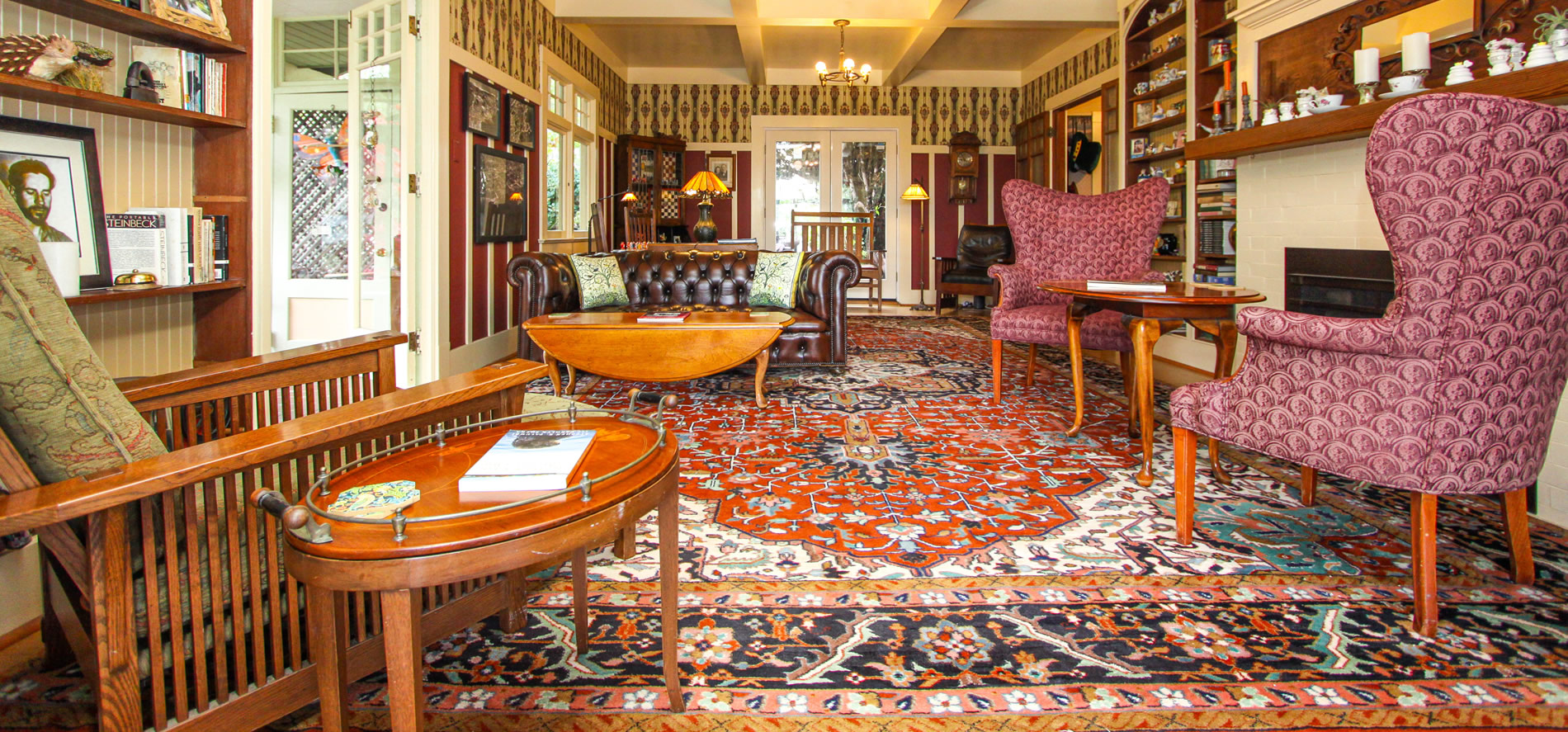
The Story of Jabberwock Inn in Monterey
EARLY ORIGINS
Perched above the shimmering waters of Monterey Bay, the Jabberwock Inn has offered a refined coastal retreat for over a century—where timeless architecture, storybook charm, and the quiet beauty of the Monterey Peninsula come together in an experience that feels both intimate and elevated.
Built in 1911 for Eva and Wilber George, this Craftsman-style home was designed as a gracious escape from the summer heat of the nearby Salinas Valley, capturing cool ocean breezes and peaceful surroundings. Even then, the property was a place to slow down, restore, and take in the natural beauty of Monterey, California.
By 1937, as the energy of nearby Cannery Row grew, the home transitioned into a place of quiet reflection under the care of the Victory Mission Sisters, hosting gatherings and classes for children in New Monterey. Its legacy as a sanctuary—set just moments from the coastline—continued through the decades.
In 1981, Barbara and Jim Allen thoughtfully transformed the home into one of the first bed and breakfasts on the Monterey Peninsula, welcoming guests into a setting that felt both personal and quietly luxurious. Inspired by Lewis Carroll’s “Jabberwocky,” Jim introduced a sense of whimsy and imagination that still defines the spirit of the inn today—where every stay feels a bit removed from the ordinary.

“Cannery Row in Monterey in California is a poem, a stink, a grating noise, a quality of light, a tone, a habit, a nostalgia, a dream. Cannery Row is the gathered and scattered, tin and iron and rust and splintered wood, chipped pavement and weedy lots and junk heaps, sardine canneries of corrugated iron, honky tonks, restaurants and whore houses, and little crowded groceries, and laboratories and flophouses. Its inhabitant are, as the man once said, “whores, pimps, gambler and sons of bitches,” by which he meant Everybody. Had the man looked through another peephole he might have said, “Saints and angels and martyrs and holymen” and he would have meant the same thing.”
― John Steinbeck